Shore fishing builds a real foundation. You learn to read water, work a presentation, identify structure, and develop the kind of patience that makes a good angler. Those skills do not disappear when you step onto a boat — but just about everything else changes.
Your footing shifts, your casting angles change, the fish behave differently relative to your position, and the environment itself demands a new level of awareness.
Making the move from the bank to the boat is one of the most exciting steps an angler can take.
It puts you directly over water that shore anglers can only cast toward, opens up species and depths that were previously out of reach, and introduces fishing methods that simply do not exist on land.
Getting there comfortably, though, requires some preparation. Here is everything you need to know before you make the transition.
Why Stepping onto a Boat Feels Like Starting Over
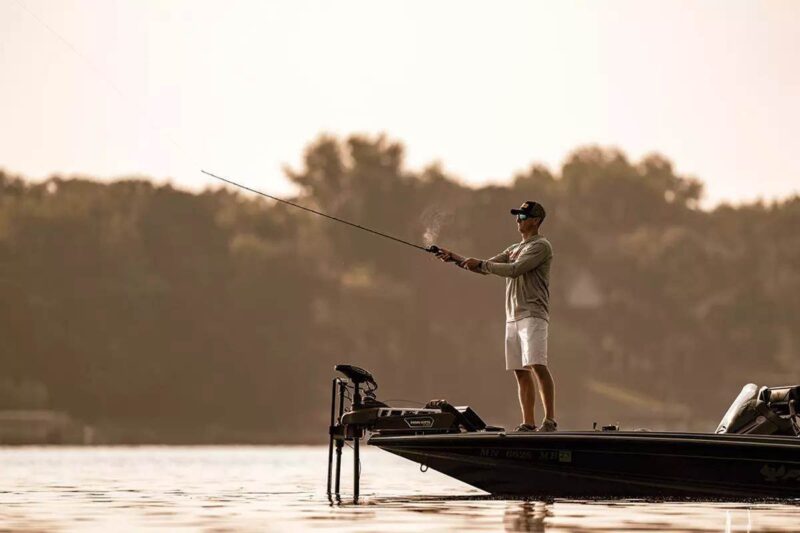
The biggest surprise for most shore anglers is how much the boat itself changes the experience. On land, you are the stationary point — the water moves, the fish move, but you stay put.
On a boat, everything moves. Wind pushes you one direction, current pulls you another, and if you are not managing that drift intentionally, you will spend more time repositioning than actually fishing.
There is also the matter of space. Shore fishing gives you room to move freely, make a full backcast, and organize your gear however you like. On a boat, especially a smaller one, every square foot is accounted for.
Knowing where your rod tips are at all times, stepping carefully when moving around the deck, and keeping your line clear of the motor are all adjustments that take some getting used to.
None of them are complicated, but they do require a level of situational awareness that land-based fishing simply does not demand.
The good news is that your core fishing skills translate directly. Your feel for a bite, your ability to read structure, and your knowledge of fish behavior are genuine advantages from day one. The learning curve is mostly about the boat itself, not the fishing.
Gear Adjustments Every Shore Angler Needs to Make
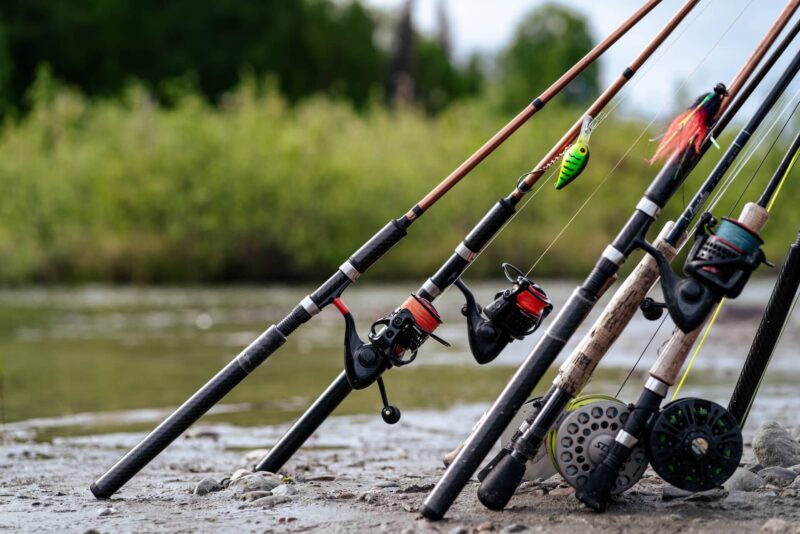
Your existing shore fishing setup will get you started on a boat, but a few areas are worth reconsidering once you make the switch.
This is not about rebuilding your entire kit from scratch — it is about thinking through how your gear performs in a new environment and making targeted adjustments where they actually matter.
Rods, Reels, and Terminal Tackle
Long rods built for distance casting are less practical on a boat when you are fishing directly below or beside the vessel, or making shorter, targeted casts to specific structure, a medium-action rod in the 6.5- to 7-foot range tends to handle better.
Braided line becomes more valuable on the water because it offers better sensitivity at depth and cuts through current far more efficiently than monofilament.
If you plan to target larger species or fish with heavier bottom rigs, a conventional reel with a levelwind system gives you more line capacity and cranking power when you need it.
A few additional items that make a meaningful difference once you are fishing from a boat rather than the bank:
- A waterproof tackle tray or sealed bag keeps your gear organized and protected from splashing water and spray
- Polarized sunglasses become even more critical on open water, where glare and surface reflection are far more intense than on shore
- A landing net with a longer handle gives you safe reach when bringing fish aboard without leaning dangerously over the gunwale
- A hook remover or dehooking tool clipped within easy reach saves you from juggling a flopping fish with nowhere solid to set it down
The Role of a Boat Anchor
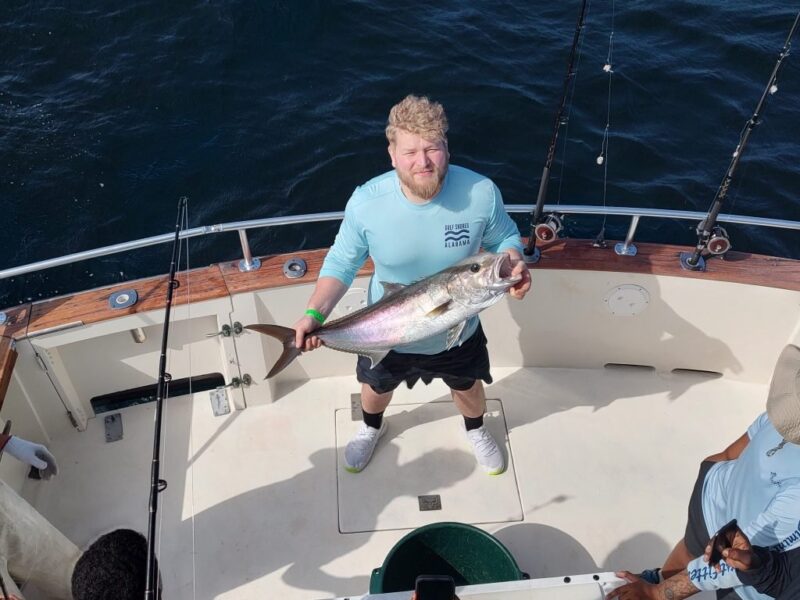
One piece of gear that shore anglers often overlook when making the transition is proper boat anchors — without one, holding position over a productive spot becomes a constant battle against wind and current.
On shore, you simply walk to your spot and stand there. On the water, staying on top of a specific piece of structure, a reef, a drop-off, or a school of suspended fish requires a reliable anchor system doing the work for you.
The right anchor depends on the bottom composition and type of water you fish most. Fluke-style anchors work well in sandy or muddy bottoms, while mushroom anchors suit calmer, softer-bottomed water like ponds and small lakes.
Danforth anchors are a widely used all-around option for both freshwater and inshore saltwater fishing. Whatever style you choose, make sure your anchor rode — the line or chain connecting the anchor to the boat — is long enough to achieve proper scope. The standard guideline is five to seven times the water depth, which allows the anchor to set at the correct angle and hold against drag.
Boat Etiquette: The Unwritten Rules Every Angler Should Know
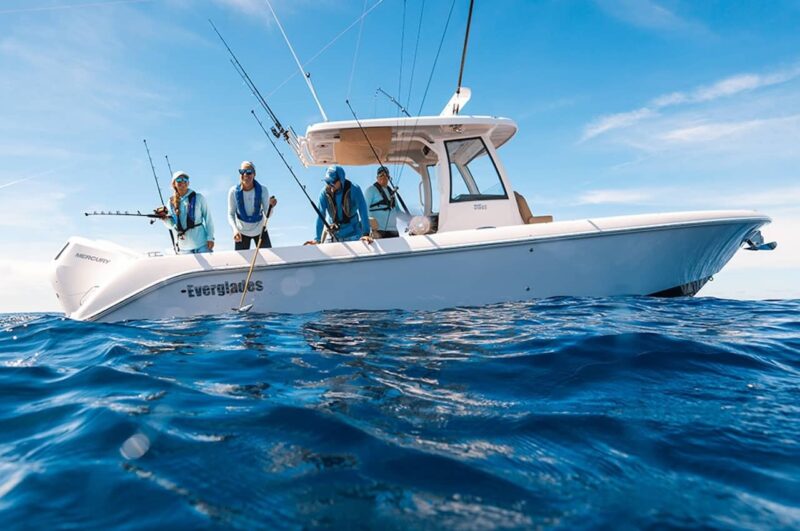
Fishing from a boat, especially when you are sharing it with others, comes with a set of expectations that shore fishing rarely requires.
Understanding them before your first trip makes the experience smoother for everyone on board — and earns you a reputation as someone worth fishing with again.
Casting awareness is the first thing to sort out. On a boat, your fellow anglers are close, and crossing lines happens fast when no one is communicating.
Talk through which direction each person is casting, take turns when moving to different positions, and always know where your hooks are when you are walking around the deck.
A treble hook at shin height on a rocking boat is a quick way to end a fishing trip on a bad note.
Noise discipline matters far more on the water than most beginners expect. Fish are sensitive to vibrations transmitted through a hull.
Dropping a heavy tackle box, stomping across the deck, or dragging an anchor chain can scatter fish from directly below you in seconds.
Moving deliberately, lowering gear carefully, and keeping volume down around productive water are habits that experienced boat anglers build early and stick with.
When fishing near other boats, give them room. The unwritten standard is to stay far enough away that your presence does not interfere with their presentations — and never anchor directly upwind of another boat in a way that puts you drifting through their water.
These are unspoken rules, but they are universally understood on the water, and violating them does not go unnoticed.
Safety Essentials Before You Leave the Dock
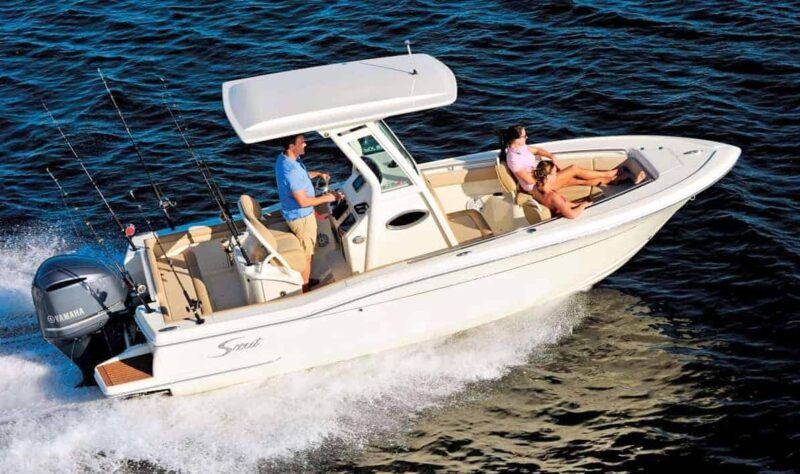
Shore fishing has its own hazards, but boat fishing introduces a different category of risk that demands genuine preparation.
Getting the safety basics right before your first trip is not optional — it is the responsible foundation every boat angler needs to build on.
Every person on the boat needs a properly fitting personal flotation device.
U.S. Coast Guard regulations require one wearable life jacket for each person on board, and many states require children under a certain age to wear one at all times while the boat is underway. Inflatable PFDs are comfortable enough that people actually keep them on — which is the only way they work.
Beyond life jackets, keep these items on board and accessible at all times:
- A throwable flotation device, such as a ring buoy or horseshoe buoy, within easy reach and not buried under gear
- A working radio or a fully charged cell phone in a waterproof case for emergencies
- A Coast Guard-approved fire extinguisher, a sound-producing device like a horn or whistle, and navigation lights if there is any chance of being on the water after dark
Checking the weather before every single trip is non-negotiable. Conditions that look manageable from a dock can turn genuinely dangerous on open water, and new boat anglers are not yet equipped to read the sky, the waves, or the wind the way experienced captains do. If a storm is in the forecast, stay home. There will always be another day on the water.
How Fishing Techniques Change on the Water
This is where most shore anglers find themselves genuinely surprised. Boat fishing is not simply a repositioned version of what you have already been doing — it introduces methods that are not physically possible from land, and learning even the basics of each one expands your fishing ability considerably.
Vertical Jigging
One of the most effective boat-specific techniques is vertical jigging — dropping a jig directly below the boat and working it up and down through the water column.
This lets you target fish holding at precise depths over structure, something you can only approximate when casting from the bank. It is particularly effective for walleye, crappie, striped bass, and various saltwater bottom species.
The technique requires less casting precision and more focus on depth control and jigging cadence, making it very accessible for anglers new to fishing from a boat.
Drift Fishing
Rather than anchoring and waiting, drift fishing uses the boat’s natural movement to cover water efficiently. Wind and current carry the boat across a flat, through a channel, or along a reef while your baits trail beneath or behind you.
It is one of the best ways to locate active fish across a broad area, and once you find a concentration, you can anchor up or use a trolling motor to work that zone with more precision. Shore anglers have no real equivalent to this — you are either in a spot or you are not.
Trolling
Trolling means moving the boat at a controlled speed while dragging lures or rigged baits through the water behind you. It works exceptionally well for pelagic saltwater species like king mackerel and wahoo, but translates just as effectively to freshwater targets like striped bass, walleye, and lake trout.
Even at a basic level — trolling a crankbait or spoon through open water at consistent depth — it can be one of the most productive methods you add to your game. The ability to cover water in a straight line at a steady pace is something that requires a boat by definition.
Reading the Water From a New Perspective
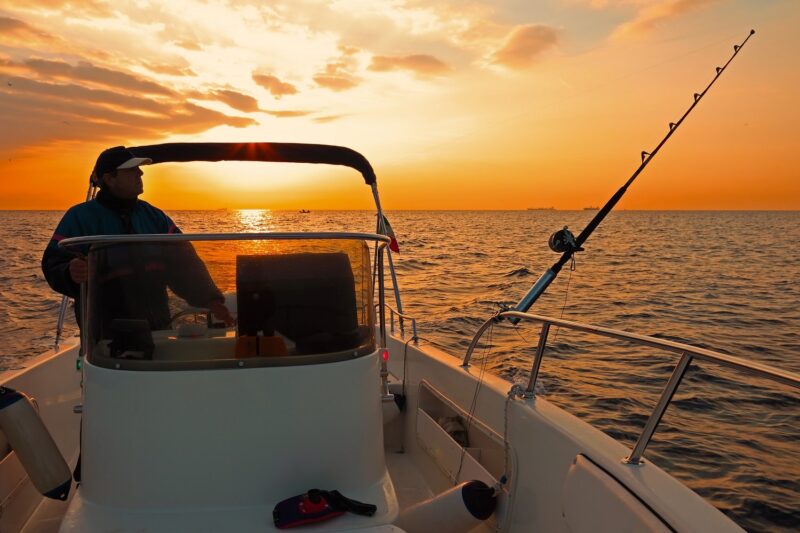
One of the clearest advantages of fishing from a boat is access to electronics. A basic fish finder or depth sounder shows you the bottom contour, reveals structure that is invisible from above the surface, and in many cases displays actual fish marks suspended at specific depths.
For anglers accustomed to reading visible water — ripples, current seams, weed edges — learning to interpret a sonar display is a skill worth investing in early. It shortens the process of finding fish on unfamiliar water dramatically.
Even without electronics, being on the water gives you a perspective on structure that shore fishing never provides. You can see where channel edges run, where depth transitions occur, and how underwater points and humps relate to surrounding water.
Structure still drives fish behavior exactly the way it did from shore — fish stack near bottom features, cover, and current breaks regardless of how you are fishing them.
The difference is that from a boat, you can position yourself directly over the best part of any given piece of structure instead of casting toward it from an angle and hoping your presentation lands correctly.
Making the Most of Your First Few Trips
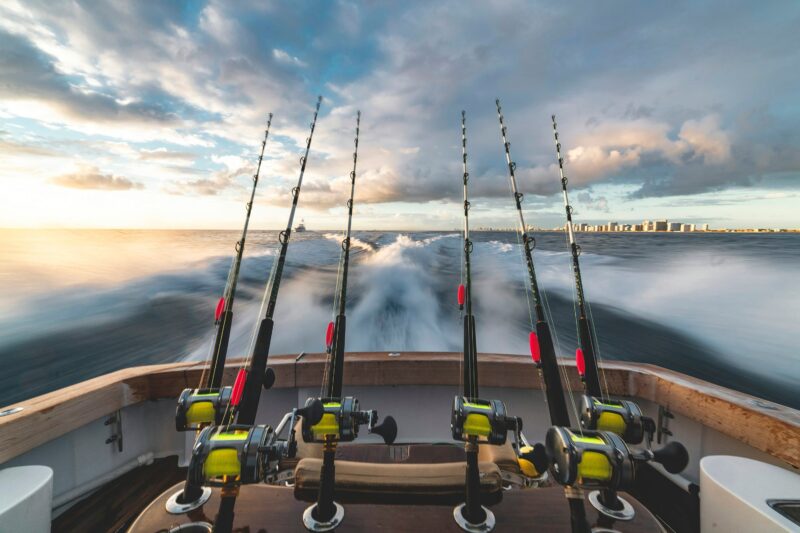
Go out with someone experienced before you take a boat out on your own. This is the single most valuable thing a first-time boat angler can do.
An experienced captain or a trusted fishing partner with boat time can walk you through the mechanics of operating the vessel, proper anchoring procedure, how to use onboard electronics, and the small details that take much longer to figure out solo.
Even one or two trips in this capacity will build a foundation that would otherwise take an entire season to develop on your own.
If you do not know anyone with a boat, a guided charter trip is money well spent.
Guides put you on fish, but they also show you how it is done — how they position the boat relative to wind and current, how they adjust when conditions change, and which presentations they reach for and why.
Pay close attention to what happens between casts, not just during them. That is where the real education happens.
Start on smaller, calmer water before pushing into larger lakes, open bays, or offshore environments.
A small reservoir or a protected cove gives you room to get comfortable with boat handling, anchoring, and casting in a forgiving setting.
Once those things feel natural, moving to bigger and more challenging water becomes a much more confident next step.
Shore fishing taught you how to fish. Boat fishing teaches you how to find them — and then put yourself in exactly the right position to catch them.
The transition takes adjustment, but the anglers who commit to it rarely look back at the bank with any longing.